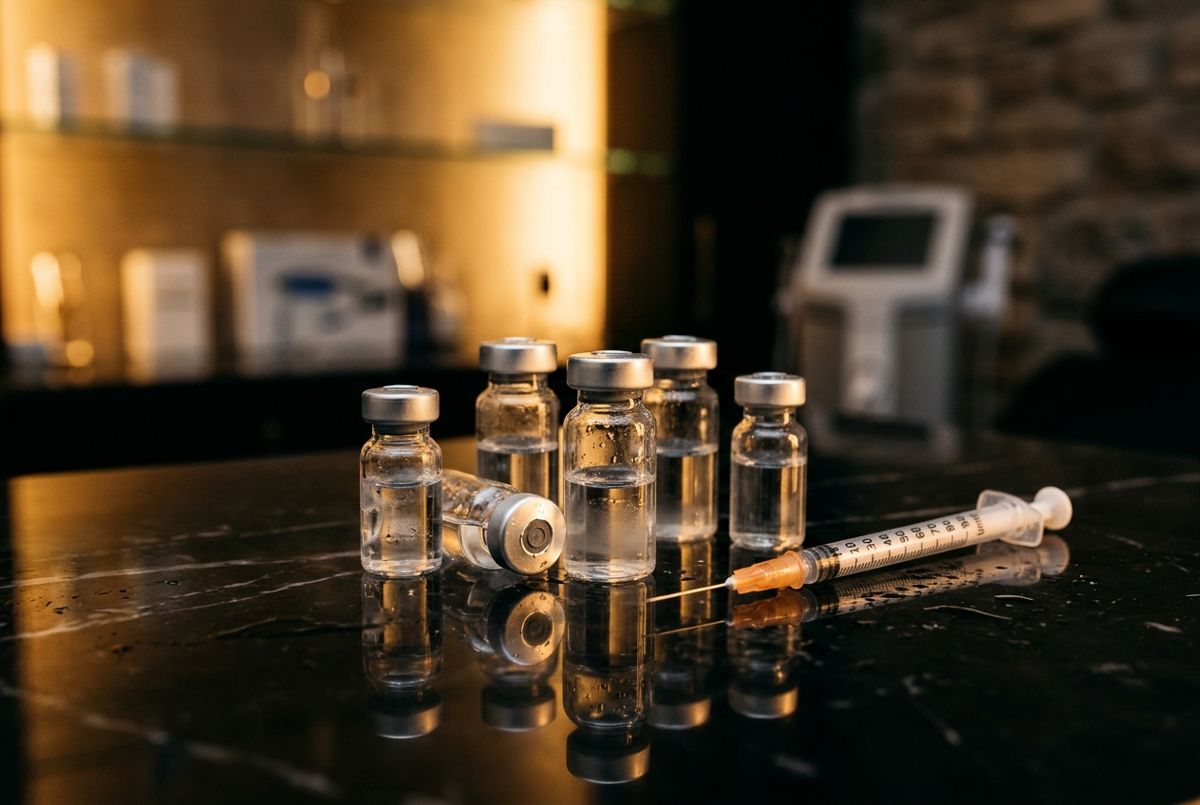

Most of what patients have read about peptides before they walk into my office comes from podcasts and forums. The enthusiasm is usually warranted. The information is usually incomplete. Peptide therapy is powerful precisely because peptides are signaling molecules — they tell your cells to do something — and that means the right peptide, the right dose, and the right monitoring matter enormously.
This article is the behind-the-scenes version: how peptide therapy actually works as a medical practice at Zen, from the first conversation to the point where you are confidently managing your own protocol.
Step One: The Consultation Is Not a Formality
Peptides are not supplements. They are prescription compounds, and our first job is to understand what we are trying to change. Recovery from an injury? Body composition that has stalled despite effort? Poor sleep and flat energy? Cognitive edge? Skin and hair? Each of those points to a different family of peptides and a different set of labs.
We also screen for the things that make peptide therapy inappropriate or that change the plan — active cancer, pregnancy, uncontrolled diabetes, certain cardiac conditions, and medication interactions. This is the step unregulated online vendors skip entirely.
Step Two: Bloodwork Tells Us Where to Start
Baseline labs do two things: they rule out underlying problems that peptides would mask rather than fix, and they give us the numbers we will use to measure progress. A typical peptide panel includes:
- Complete metabolic panel and CBC — organ function and overall health
- IGF-1 — the downstream marker of growth hormone activity (critical for CJC-1295, Ipamorelin, Sermorelin, Tesamorelin)
- Fasting insulin, glucose, and A1C — metabolic status, essential before GLP-1 peptides
- Thyroid panel and sex hormones — peptides and hormones interact; we optimize them together
- Inflammatory markers (hs-CRP, homocysteine) — for healing and longevity protocols
- Lipid panel and vitamin D — baseline health and risk assessment
Step Three: Matching the Peptide to the Goal
Healing and Recovery
BPC-157 and TB-500 remain the workhorses. BPC-157 acts locally — tendons, ligaments, gut lining — while TB-500 distributes systemically. For a patient with a nagging shoulder and gut issues, we might run both. For post-surgical recovery, we often add GHK-Cu for tissue remodeling and scar quality.
Body Composition and Growth Hormone Optimization
CJC-1295 with Ipamorelin is the most-prescribed stack in the clinic. It restores a youthful growth hormone pulse rather than replacing the hormone, which is why side effects are minimal. Tesamorelin is the choice when visceral fat is the primary target. Sermorelin is our gentler entry point for patients new to peptides.
Metabolic and Weight Management
Semaglutide and Tirzepatide are peptides, and they are the most effective weight-loss medications ever developed. We dose conservatively, titrate slowly, protect lean mass with adequate protein and often a GH secretagogue, and monitor labs monthly early on.
Cognition, Mood and Longevity
Semax and Selank for focus and stress resilience; Epitalon and MOTS-c for cellular aging and mitochondrial function; NAD+ precursors as the fuel underneath all of it. These protocols are more individualized and we build them slowly.
Step Four: The Pharmacy Matters More Than the Peptide
Here is the uncomfortable truth about "research peptides" sold online: independent testing has repeatedly found underdosed vials, contamination, and in some cases the wrong compound altogether. Every peptide we prescribe comes from a licensed, 503A or 503B compounding pharmacy with certificates of analysis for purity and sterility. It costs more than a gray-market vial. It is also the only version I will put my name on.
Step Five: Injection Training and Your First 90 Days
Nearly every patient is nervous about self-injection. Nearly every patient tells us after the first one that it was nothing. Most peptides use a tiny insulin needle just under the skin of the abdomen; our nursing team walks you through reconstitution, dosing, storage, and timing until you are comfortable. Some protocols can be done entirely in-clinic if you prefer.
- Weeks 1–2: Tolerance and adjustment. Sleep is typically the first thing to improve.
- Weeks 3–6: Recovery speeds up, energy stabilizes, appetite and cravings shift on metabolic protocols.
- Weeks 6–12: Visible body composition changes, skin quality improvement, measurable lab changes.
- Day 90: Follow-up labs. We compare to baseline, adjust doses, add or rotate peptides, and plan the next phase.
Cycling, Stacking and Long-Term Use
Peptides are generally cycled — typically 8 to 12 weeks on, with a break — to keep receptors sensitive and to reassess whether the goal has been met. Stacking two or three complementary peptides is common and, done correctly, more effective than any single compound. Our Stack Builder on the peptide catalog lets you shortlist combinations before your consultation so we can start the conversation from your goals.
Peptide therapy, done this way, is not a shortcut. It is precision medicine with a very good safety profile and results most patients can feel within a month. The first step is simply knowing where you are starting from.